
What is an Anaesthetic?
General anaesthesia is a state of controlled muscle relaxation, unconsciousness and analgesia (pain management). There are many ways this can be achieved but at EVR anaesthetic drugs are injected into the veins of your pet as well as via inhalation of anaesthetic gases.
What is a Sedation?
Sedation is a state of ‘sleepiness’ to physically and mentally relax your pet. A sedation is different from a general anaesthetic as is does not induce total unconsciousness, but instead induces relaxation and drowsiness. A sedative is usually given via an injection into muscle or via veinous access.
Why does my pet need an anaesthetic/sedation?
Your pet will need a general anaesthetic if they require a surgery to correct a medical condition such as cataract removal surgery. This is because we cannot perform these procedures on a conscious or sedated animal as they would not be relaxed and still enough, for long enough.
Your pet may require sedation for a few reasons at EVR. Sometimes we may need to put your pet under sedation for an examination, as our vets cannot fully examine your pets eyes if they are very lively/bouncy! Additionally your pet may require a small procedure, such as a diamond burr debridement, where we will need your pet in a relaxed state to carry this procedure out. This limits stress on your pet, and allows the procedure to be carried out quickly & efficiently.
What do I need to do to help prepare my pet?
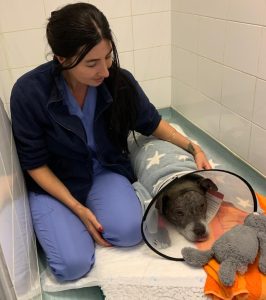 Before a sedation or anaesthetic is carried out one of our members of staff will contact you via phone or email and advise you about this procedure.
Additionally we ask if:
- Your pet can be starved for at least 6 hours before the procedure – This means no food/treats or biscuits. However, they may have access to water.
- For Diabetic patients – DO NOT feed your pet on the morning of the procedure (unless advised otherwise) but DO give a half dose of their normal insulin at the usual time.
- Cats should be kept indoors overnight to prevent them from finding other sources of food and to help make it easier for you to locate them and bring them
- Please take your dog for a short walk before you arrive, to allow them to pass urine & faeces before their anaesthesia / sedation.
- Please take note of any changes or illness your pet may have experienced before the procedure, as well as any additional tests performed (Blood tests, X-rays).
- Please bring a list of current medications and details of their last doses. This includes parasitic control, and vaccinations.
What happens after admit?
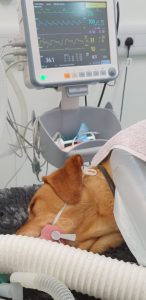 After your pet has been admitted a member of the nursing team will check all medical history and information to help find the appropriate anaesthetic protocol, in conjunction with the case Veterinary Surgeon. A pre-operative check will also be carried out on your pet as a basic health assessment – temperature, heart rate, respiratory rate, blood pressure & gum colour will all be assessed, as well as intraocular pressure for some procedures. Additionally we may ask to carry out blood tests to establish whether there are any underlying health conditions, and to ensure liver and kidney function is adequate for the sedation / GA.
An intravenous catheter will be placed to provide venous access for medication as well as fluid therapy. You may notice the shaved patch and a bandage on your pets leg when they are discharged.
For anaesthetics:
Your pet will then be injected with their ‘pre-med’ – medication to help them relax and provide pain relief prior to surgery. After 10 – 30 minutes (depending on the medications & route of administration), an anaesthetic induction agent will be injected intravenously to provide further relaxation, and an endotracheal tube (breathing tube) will then be placed down your pets wind pipe (trachea). They will then be connected to the anaesthetic machine where they will be constantly provided with oxygen and anaesthetic gas, and monitored by a trained RVN throughout.
For Sedations:
Your pet will then be injected with a sedative injection to help relax them and provide pain relief before their procedure. An endotracheal tube (breathing tube) is not always placed for a sedation, as your pet will still be able to breath on their own, but anaesthetic support will always be available and ready if needed.
Is it painful?
Included with your pets pre-med/sedative injection is usually a strong pain relief medication alongside the sedative. Additionally, further pain relief may be given, such as an NSAID injection (Metacam, Rheumocam) or other medication such as IV paracetamol. Local anaesthetics (Lidocaine, bupivacaine) may also be provided as a local source of pain relief to the surgical area. Your pet will be monitored constantly by a member of the nursing team where they will be able to act under the supervision of the Veterinary surgeon if they believe additional pain relief is needed.
How can I help my pet after they’ve had an anaesthetic/sedation?
 Your pet will most likely still be a little sleepy afterwards, and this may last for 24 hours. To help aid their recovery:
- Feed a small bland meal for their dinner (chicken, white fish, rice). They may not always eat so don’t worry if they do not want any dinner. Water can be provided ad lib. However, if they are not eating the next day, please call us for advice.
- For Diabetic patients – Feed the usual amount of food at the normal time on the evening of surgery if possible, or as close to the normal time if not. If they eat well, they can have a full dose of insulin. If they do not eat well (i.e. less than half the meal), give a half dose of insulin. Please check your discharge instructions for any specific instructions for your pet. Water can be provided ad lib.
- Provide a quiet and enclosed area for them to keep warm and rest
- Keep cats indoors for at least 48 hours afterwards or until your vet has advised. If your cat is wearing an Elizabethan / buster collar, please keep them inside until the collar is removed / the vet advises they can go out.
- Take your dog for a short walk in the garden or up and down the road to help them go to the toilet. Keep clear of bushed and low hanging sticks as these can be funnelled in towards the face / eyes whilst wearing an Elizabethan / buster collar. They may also need your guidance to navigate obstacles.
- Follow the discharge sheet provided after their procedure or give us a call with any questions or worries.
For any further questions or concerns please contact us via email or telephone
Telephone – 01303 840 499 Email – reception@elhamvalley.com